

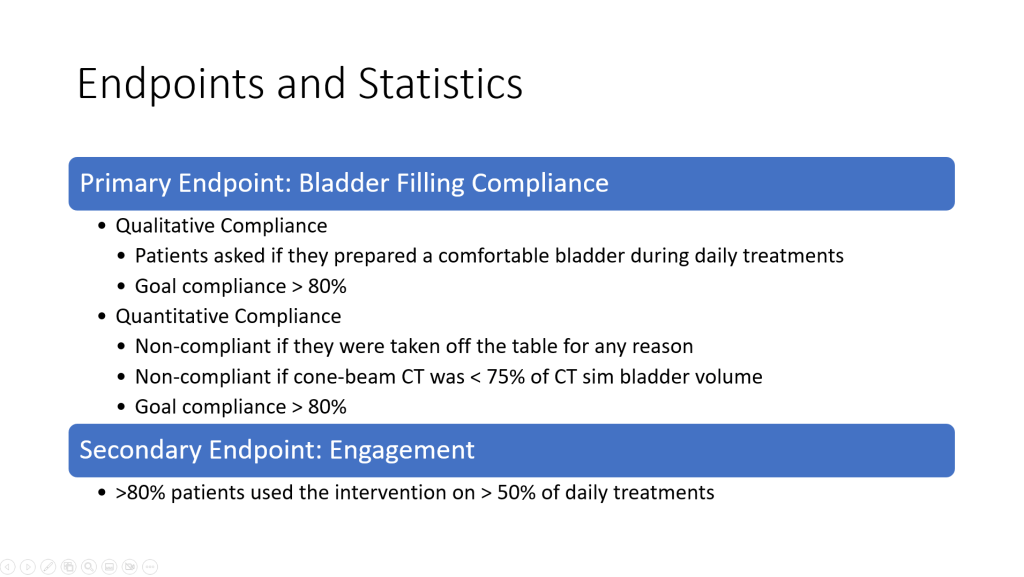
Prostate cancer patients undergoing radiation need to prepare their bowel and bladders for treatment because empty bladders and full rectums are associated with increased toxicities. This is such an established paradigm at our institution that physicians will not treat patients unless these two conditions are met. Patients that are identified with unprepped bowel/bladder on cone-beam CT are taken off the table to fix their issue.
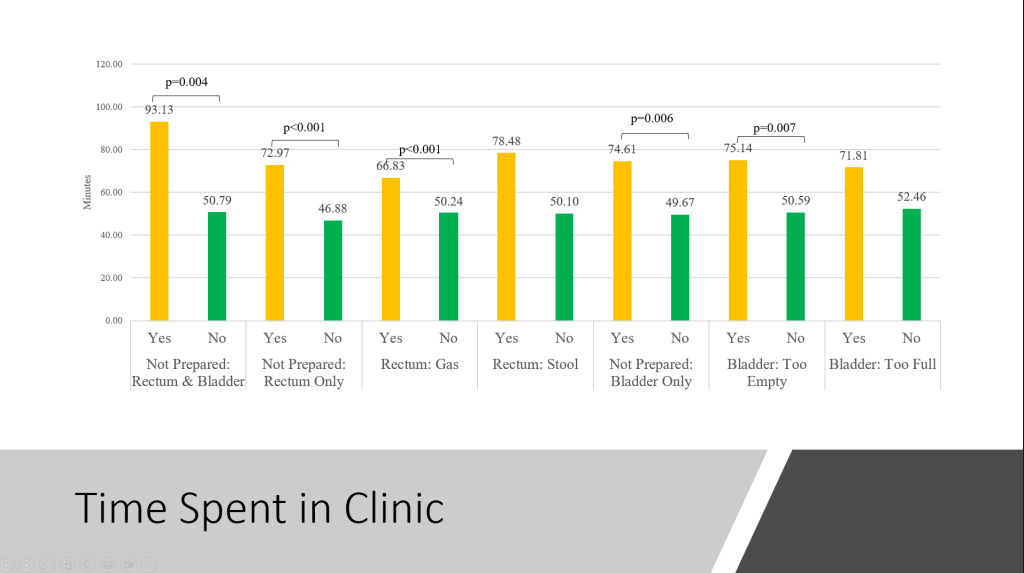
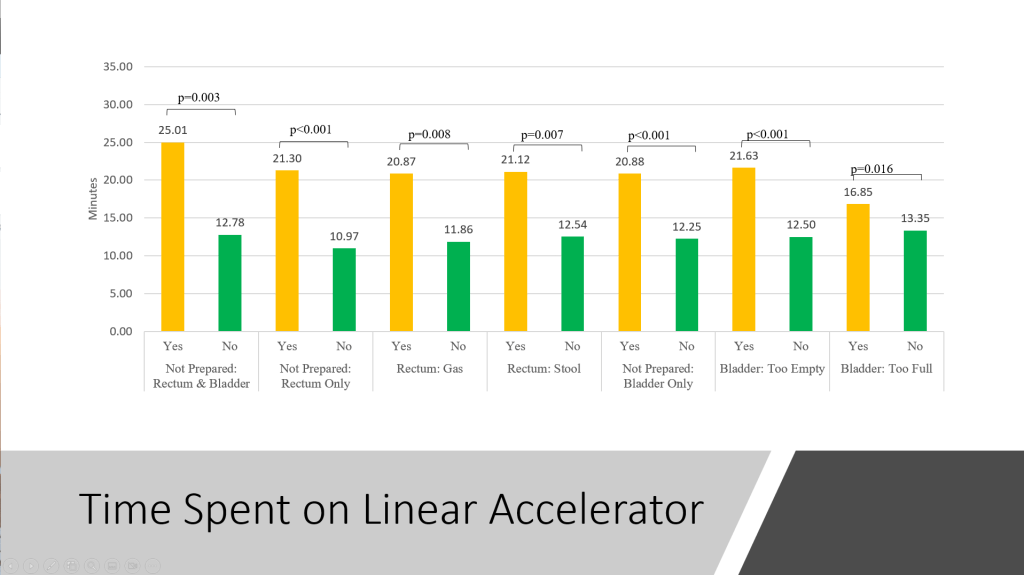
You can imagine that adequate prep may be a major source of anxiety for patients during treatment, and a potentially an inefficient use of our most limited resource, the linear accelerator.
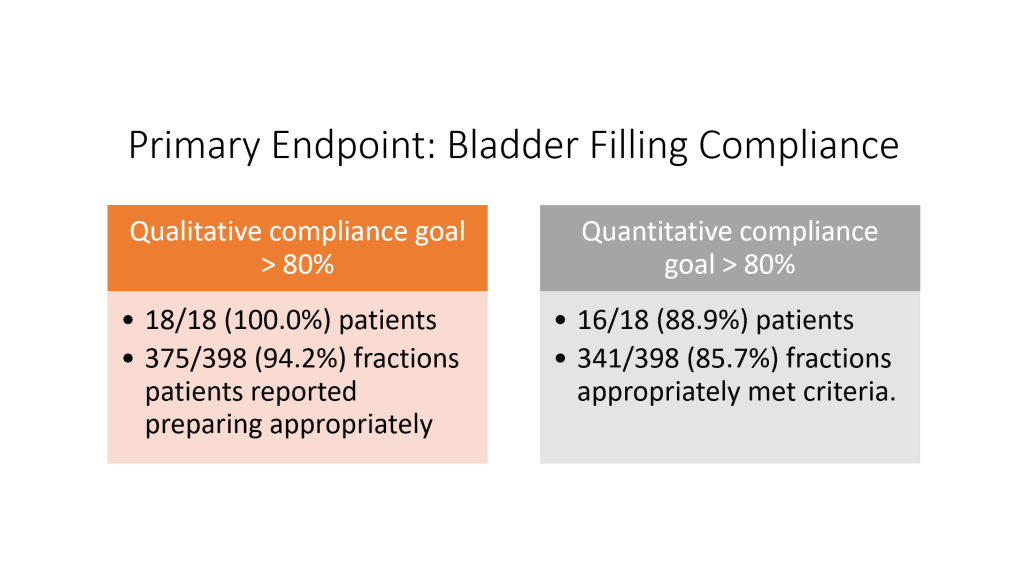
Previous studies found that with just verbal and written instructions, compliance rates for bladder filling were abysmal at approximately 50%.
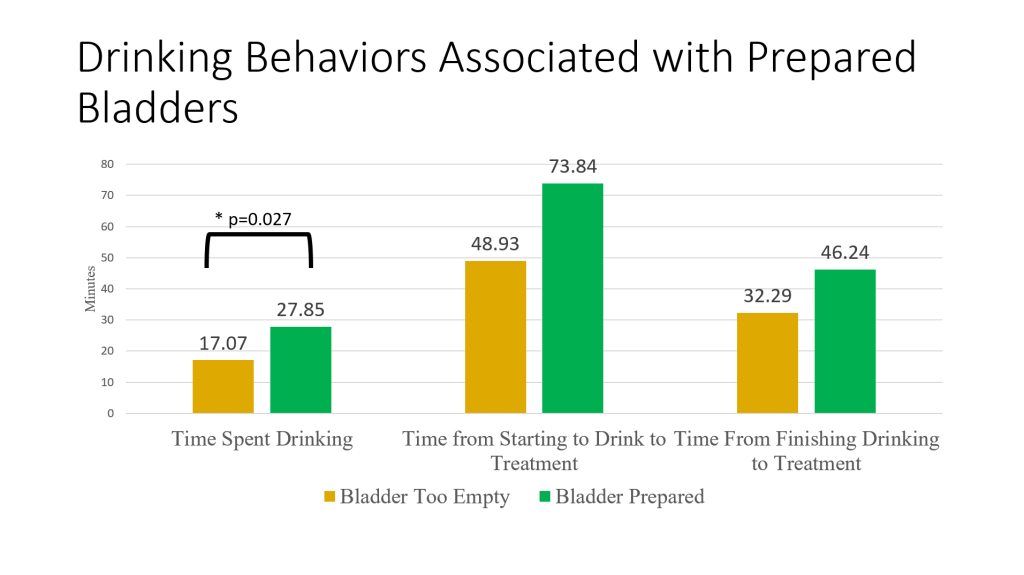
But another problem exists. If you need to pee because your bladder’s full, your body knows what that there’s a feeling for that. But what we need for prostate radiation, is a comfortably full bladder or somewhere between 50-75% full. You body doesn’t know what that feels like, yet that’s what we expect of our patients.
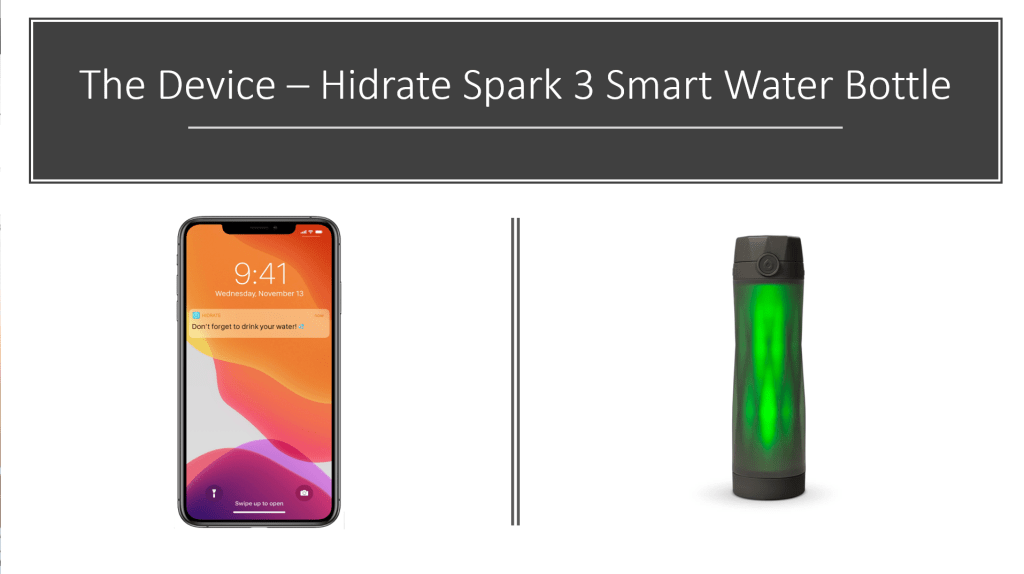
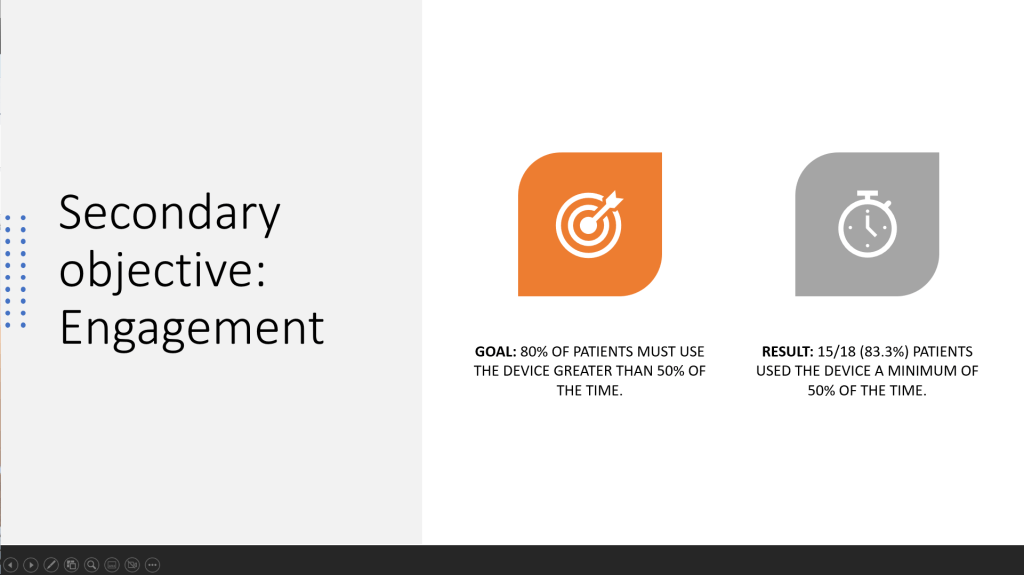
The Pew Research Center’s 2021 survey revealed that 85% of Americans own a smartphone, significantly increased from 31% in 2011. Between the age of 50-64, this ~83% smartphone ownership does not break down across ethnicity. However, smartphone ownership dropped to 63% in the age 65 and older group. The primary demographic of men with prostate cancer who receive radiotherapy is aged 50+. We hypothesize that a smartphone-based digital behavioral intervention could be easily adopted by prostate cancer patients.
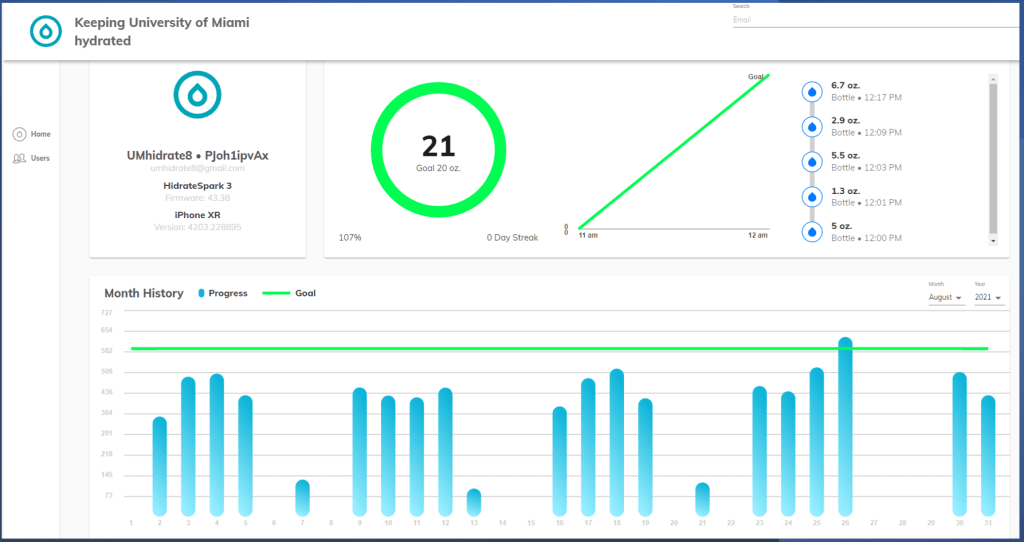
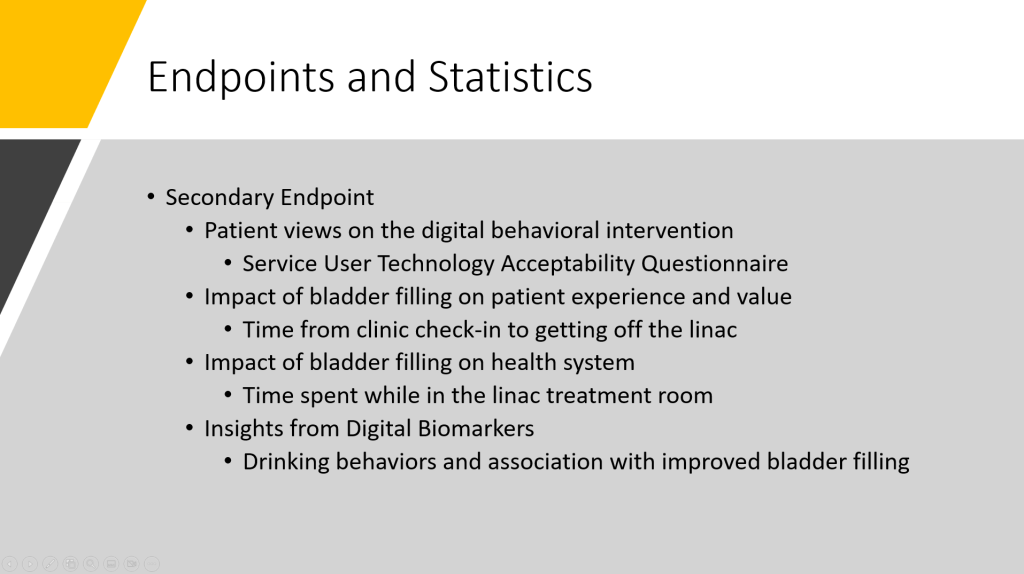
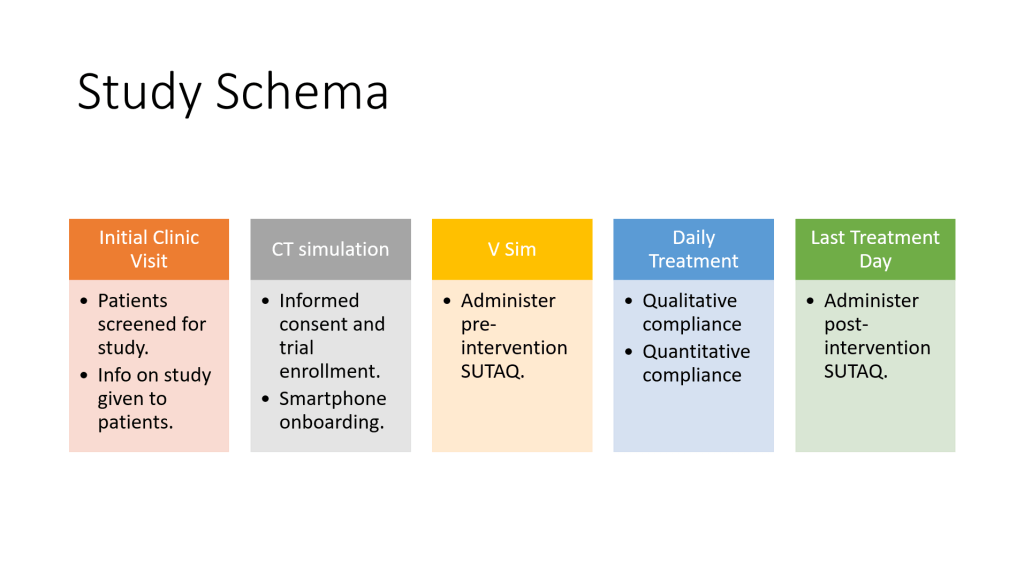
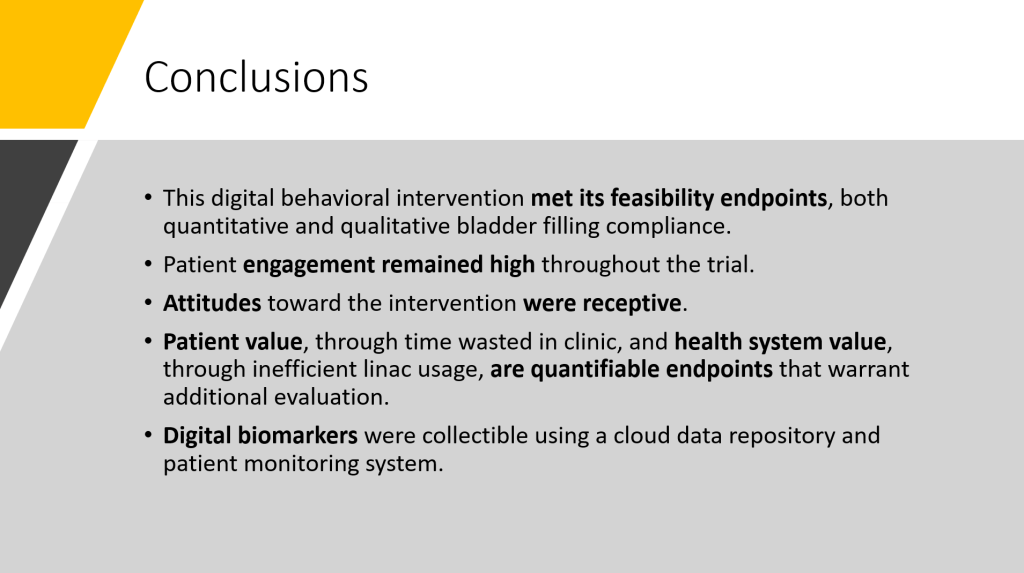
This led to our prospective, non-randomized, pilot study of a digital behavioral intervention to improve bladder-filling compliance in prostate cancer patients undergoing definitive radiotherapy (NCT04946214).



 Will Jin, MD/MA